The Irish Sweep is still accepting calls to answer questions and schedule any service needs. However, no on-site visits are currently being conducted pursuant to the government's stay in place order. Please feel free to contact us at 510.521.4088 to get answers to your questions or schedule a future appointment.

WHAT ARE “NO BURN DAYS”?

Spare the Air was formed in 1991 by the Bay Area Air Quality Management District to inform residents when the air quality is forecast to be harmful and to share information on ways to decrease air pollution. No Burn Days are also called “Winter Spare the Air” days.

In 2008, the Air District approved a rule that makes it illegal to burn firewood on days once a Winter Spare the Air alert is in effect. This guideline was adopted to protect public health.

During winter months, wood smoke is the major source of air pollution in the Bay Area, accounting for more than one-third of fine particulate substance pollution. On cool, peaceful days when there is an inversion layer of warm air acting as a cover over a layer of cold air, wood smoke can build up at ground level to harmful concentrations.

There are numerous things residents can do to decrease their impact on air quality over the winter, when these weather conditions endure. The first line of protection is to limit usage of wood-burning stoves, and ideally switch over to a different heating method, such as gas, or EPA-certified wood stoves.

CHECK FOR ALERTS BEFORE YOU BURN

Never fail to spot an alert by signing up for Winter Spare the Air Alerts. Modify your alert for text, email, or phone call. Winter Spare the Air Alerts will as well be posted to the Spare the Air and Air District websites and social media.

KEEP IN COMPLIANCE

Besides avoiding burning wood on Winter Spare the Air Days, there are additional provisions in the wood-burning rule.

Wood-burning devices are forbidden in new buildings constructed in the Bay Area. Gas-fueled fireplace, gas inserts, and electrical fireplaces are acceptable.

We want you to stay warm this winter, but make sure you first check if that day is a “no burn day” by visiting the Spare the Air website.

PREPARING YOUR FIREPLACE FOR FALL AND WINTER

Nothing is more pleasing when the temperature drops than the soft amber blaze of a crackling fire. But before you light up that firewood, there are numerous steps you need to take to get your fireplace ready, and for excellent reason. Prepping your fireplace for fall can:

  • Improve the air quality in your house
  • Avert fires
  • Save energy
  • Keep your home warm

Chimney preparation steps are given below:

ARRANGE A YEARLY INSPECTION

All chimneys should be examined and cleaned by a chimney cleaning company at least once a year. A careful cleaning will eliminate any buildup of creosote, an oily and extremely flammable byproduct of burning wood, gives you a safer fireplace.

CLEAN THE FIREBOX

Eliminate and clean the grate and other accessories that are inside the firebox. Vacuum or remove the ash and store it in a metal container with a sealed lid. There are several ways you can recycle the ash. You can use it in your backyard as a fertilizer, to dissolve ice, and even clean the fireplace doors, for example. Be sure to keep a small amount of ash. It will help with starting your initial fire of the season.

CHECK FOR CRACKS AND DAMAGE

Check for cracks and wobbly joints of the firebricks inside the fireplace, and check the external masonry for damage. Hire an expert mason to do any repairs—never try to repair firebrick with ordinary mortar, as the blend cannot stand up to high heat.

EXAMINE THE CHIMNEY CAP AND DAMPER

Ensure the fireplace damper is working accurately and that there is no wreckage preventing it from opening and closing. Make sure that the chimney cap is firmly attached and in good condition. The cap should comprise protective screening to keep birds, squirrels, and other pests from entering the chimney.

CLEAR AWAY TREE LIMBS

While you are outside examining the chimney cap, trim any overhanging tree limbs that may be squeezing on the chimney. Tree limbs can restrict the proper draft of the chimney and spoil the cap.

CLEAR OUT ASHES

Clean out the firebox once in a week, or whenever the ash is more than an inch deep. Coals can stay hot for up to three days, so ensure everything is completely cold. Remove or vacuum the cold ashes and dispose it outside—wood ashes are just right for garden beds and compost piles.

HOW TO PREP A GAS-BURNING FIREPLACE

Clean the blower

Check your gas-burning fireplace to see if it has a blower. If it does, clean it. Distinct from furnace blowers, the blowers of gas-burning fireplaces do not have a filtering system to stop buildup. Dust buildup can cause early wearing of the bearings. Dust can insulate the motor, which prevents it from cooling correctly, eventually leading to motor failure.

Replace batteries

Before every season, change the batteries in any remote transmitters and receivers, if appropriate. Also, replace the batteries and examine any smoke or carbon monoxide detectors to ensure they are working properly.

UPDATE TO REGULATION 6, RULE 3, PROPOSED AMENDMENTS

Information gleaned from www. baaqmd.gov

Sole source of heat:
A wood-burning device may be used during a mandatory burn ban if the device is the only source of heat in a residential dwelling and the device is EPA certified. A person claiming

this exemption is required to register the EPA certified device in the District’s registration program and submit records to the District for verification.
(Effective November 1, 2016)

Non-Functional, Permanently Installed Heating Device:
Residential dwellings (excluding commercial and residential rental properties) that have a non-functional, permanently installed heating device may receive a temporary exemption from a mandatory burn ban if repairs are completed in 30 days and submission of all repair documentation is submitted to the District within 10 days of completion.
(Effective November 1, 2015)

Loss of Electric Power and/or Natural Gas:
The use of a wood-burning device is allowed during a mandatory burn ban when there is loss of electric power and/or natural gas as determined by the utility service providers.
(Effective November 1, 2015)

Mandatory Burn Ban:
A mandatory burn ban is declared to prevent regional wood smoke accumulation when a PM2.5 level is anticipated to exceed an unhealthy level within the next 3 days.

Update to the above:
A mandatory burn ban is declared when a negative impact upon public health is anticipated resulting from PM2.4 levels forecast to exceed 35 mg/m3. “Mandatory Burn Ban” will replace “curtailment period.” (name change)
Staff determined that Rule 6-3 already allows the District flexibility to declare Winter Spare the Air Alerts 2 – 3 day sooner to prevent unhealthy air from occurring and it is not necessary to amend the regulatory requirements of this section.

Sales and Manufacturing of Wood Heaters:
All new EPA certified wood-burning devices manufactured and sold must meet or exceed new NSPS standards:
• Effective 60 days after new NSPS standards are published in the Federal Register:
o 4.5g/hr for catalytic and non-catalytic stoves using crib test or cordwood test. If cordwood testing is conducted, the manufacturer must supply the emissions test method to EPA and the test method must be approved.
o Effective 5 years after the date of the final rule, the following new NSPS standards apply:
2.0 g/hr for catalytic and non-catalytic stoves using crib test.
2.5 g/hr for catalytic and non-catalytic stoves using cordwood test. The manufacturer must supply the emissions test method to EPA and the test method must be approved.
Wood stove retailers will be allowed to sell existing inventory of EPA certified devices rated 4.6 g/hr – 7/5 g/hr until December 31, 2015.

Sale or Transfer of Real Property has been changed to Disclosure Requirements for Real Property:
Real estate property may not be sold or transferred if it includes an uncertified wood-burning device. The seller may decommission the uncertified device or may replace it with gas-fueled, electric, or EPA Certified devices that meet or exceed new NSPS standards.
(Effective November 1, 2016)

Update to the above:
Removed Proposed “Point-of-Sale” Requirement
The “point-of-sale” requirement has been changed to require disclosure documents upon sale or rental of real property to disclose health hazards of PM2.5
(Effective November 1, 2015)

Fireplace or Chimney Remodels:
Upon remodeling a fireplace or chimney, an uncertified wood-burning device must be replaced with a device that is gas-fueled, electric or EPA certified that meets or exceeds new NSPS standards. This requirement is triggered by any fireplace or chimney remodeling activity that requires a local building permit.
(Effective November 1, 2015)

Update to the above:
Upon remodeling a fireplace or chimney, an uncertified wood-burning device must be replaced with a device that is gas-fueled, electric or EPA certified if the remodel cost exceeds $15,000 and requires a local building permit.
(Effective November 1, 2016)

Commercial and Residential Rental Property has been changed to Rental Properties with Natural Gas Service:
All commercial and residential rental properties must have an alternate form of heat that does not burn solid fuel and all wood-burning devices must be EPA certified or be replace with gas-fueled or electric devices.
(Effective November 1, 2016)

Update to the above:
Removed proposed requirement that all rental properties must replace wood-burning devices with gas-fueled, electric or EPA certified devices.
All rental property in areas with natural gas service must have an alternate from of heat that does not burn sold fuel.
(Effective November 1, 2018)

New Building Constructions:
New building constructions may only install gas-fueled or electric devices. Installation of devices that burn solid fuel is prohibited.
(Effective November 1, 2015)

Update to the above:
Only the date has been changed.
(Effective November 1, 2016)

Visible Emissions Limitation:
Following a 20 minute start-up allowance for new fires, visible emission of grater than 20% opacity and aggregate to 3 minutes in any hour is considered an exceedance of the standard.
(Effective November 1, 2015)

Registration:
Registration – All residential properties claiming Only Source of Heat Exemption must have a registered EPA certified device.
o Type of Device(s)
o # of Device(s)
o Make, Model and Serial # of Device(s)
o Manufacture Date(s)
(Effective November 1, 2016)

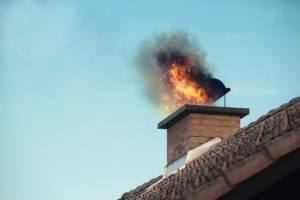
What Options Do I Have For Fireplace Conversion?

Wood burning fireplaces offer a certain charm and ambience to your home, but when it comes to heating and environmental efficiency they are far from the best choice. If you have a fireplace at home, you may want to keep it, while also making it safer, more efficient, and more environmentally friendly. That’s where fireplace conversion can be the ideal way to transform your inefficient wood burning fireplace into a more efficient and functional heating installation.

The Problem With Wood Burning Fireplace Conversion

Wood burning fireplaces can be one of the most inefficient options, with much of the heat from within the home and as well as the heat generated from the fire simply being lost through the chimney. Wood burning fireplaces also add smoke, pollution, and particulate matter to the air which can trigger allergies and asthma and contribute to environmental pollution. Wood burning fireplaces increase the risk of chimney fires and home fires due to the buildup of creosote as a byproduct of wood burning.

Fortunately, when it comes to switching out your wood burning fireplace for a cleaner, more efficient version, you have a number of options.

Wood Burning Fireplace Inserts

Wood burning fireplace inserts retain the charm of traditional wood burning fireplaces, while lessening the environmental impact. Wood burning inserts reduce drafts and heat escaping from the fireplace, while ensuring wood burns hotter and more completely. Wood burning fireplace inserts can fit right into a traditional fireplace, converting it into a more efficient option.

Artificial Gas Logs

Artificial gas log fireplaces can offer an economical option that gives the effect of a real wood-burning fireplace without the pollution and the mess. Artificial gas logs may still need to be installed with glass door enclosures to reinforce insulation and prevent heat loss. Gas log fireplaces use gas as a fuel which can be more economical than firewood (if you need to pay for firewood). Gas log fireplaces provide reliable heat without the pollution of smoke and the mess of ash and creosote.

Gas Fireplace Insert

A gas fireplace insert is like a gas heater installed within the firebox of the existing fireplace. Because they are sealed, they are more efficient than gas logs and can provide reliable heat with adjustable flames. Gas fireplace inserts can cost more to install initially but can offer a more efficient heating solution without the health and environmental concerns of other fireplace options.

Electric Fireplace Insert

Electric fireplaces can be useful as they don’t require a chimney to vent. That means if your chimney is not functioning you can still create the effect of the fireplace with an electric insert. The drawback of an electric fireplace is that there are no flames, so it doesn’t have the same effect as other installations. While Electric inserts are inexpensive to install, electricity is generally not the most efficient fuel source. However electric inserts can provide a good source of heat as a nonpolluting alternative to an open fire place.

For environmental, health, and economical reasons, swapping out your traditional fireplace for a more efficient version makes sense. If you’re not sure which fireplace alternative is right for you, talk to our fireplace experts today to learn more about which fireplace conversion will work best for your home.

When Is The Best Time Of Year To Do Chimney Cleaning Service?

Wood burning fireplaces do require inspections, maintenance and chimney cleaning service. As winter approaches, you may be looking forward to cozy days around the fire. If you are lucky enough to have a wood burning fireplace, it can be easy to neglect through most of the year up until time to set up that first winter fire.

Now you may be wondering, why should I have my chimney cleaned and when?

Advantages of Regular Chimney Cleaning Service

As wood burns in your fireplace it releases smoke and ash, and over time, creosote can build up. If you have not heard of creosote, it is a flammable substance that builds up like a glaze, coating the interior of your chimney. Creosote needs to be removed regularly so it doesn’t build up and prevent the flow of smoke leaving the chimney. Also, because creosote is flammable, it needs to be removed to prevent chimney fires.

You should have your chimney inspected at least yearly and cleaned as needed. If you recently purchased a home, have the chimney inspected before using the fireplace. Regular maintenance and cleaning help to prevent larger problems and more expensive repairs. Having your chimney inspected, cleaned, and maintained each year will help keep your home and family safe.

When professionals clean your chimney, they remove soot and dangerous creosote built up on the interior. They will also check for any blockages, which could cause smoke to build up in your home if not removed. A professional will make sure everything is in working order for safe and effective operation.

Advantages of Spring or Early Summer Chimney Cleaning Service

Some say that spring is the best time to have your chimney inspected and cleaned. This is because winter weather might have damaged the masonry, which you would want to catch and repair right away during warm summer months. Additionally, a spring cleaning will get you ready for fall and winter fires, well ahead of the peak cleaning season, so you can avoid waitlists and have it done quickly.

Advantages of Late Summer or Fall Cleaning for your Chimney

Others would argue that fall is the better time to have your chimney cleaned. This is because when your fireplace has not been used in a while, such as during the spring and summer months, pests can enter and set up their homes. Rodents and birds can build nests that clog the chimney. This could be dangerous as smoke is then unable to flow through, and additional creosote could build up, increasing flammability.

Contracting chimney cleaning service company that will provide regular inspections and cleaning is your easiest option. They will remind you when it is time for your inspections. Given the advantage of both spring and fall cleanings, you may opt to have them both in order to maintain your fireplace if you use it often.

During inspections, the professionals will look for any problems, clean as needed, and perform or recommend necessary maintenance on your chimney. This can all help to prevent more serious operational issues and maintain a healthy, efficient function of your fireplace all year round.

© Copyrights 2026 The Irish Sweep All Rights Reserved.