
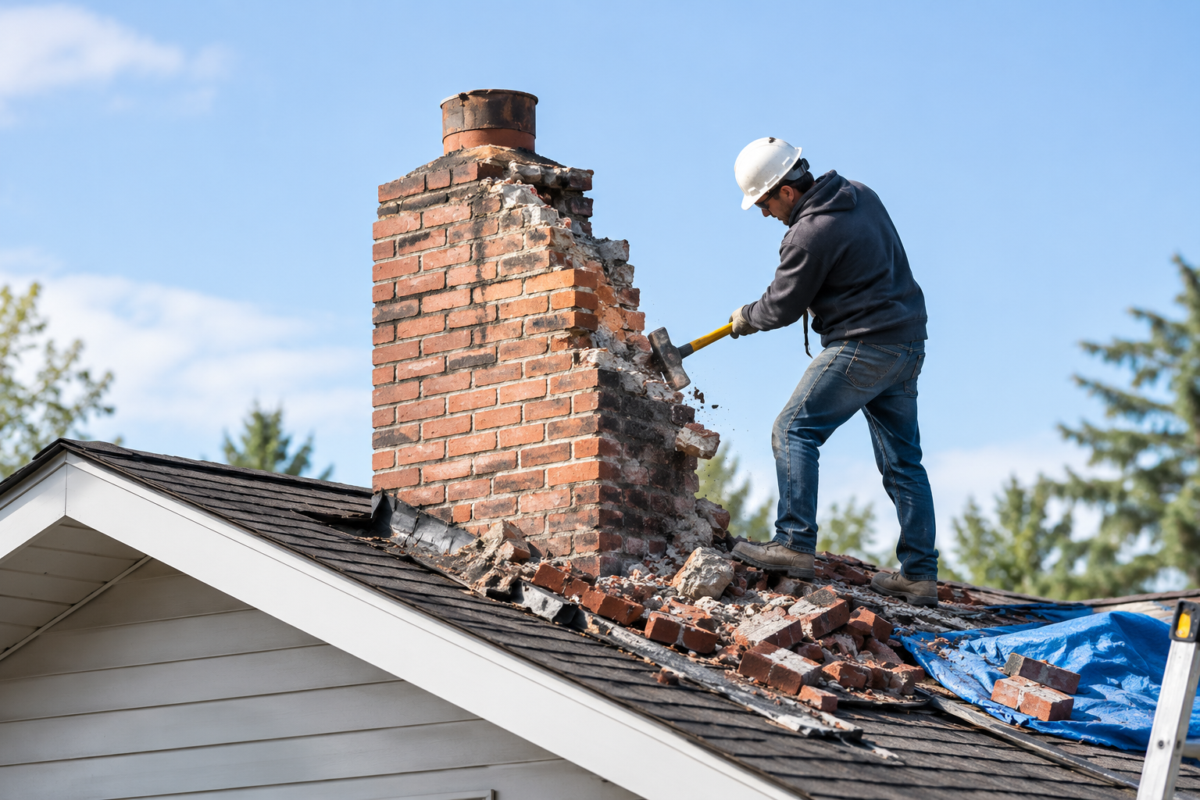
A chimney can be a beautiful part of a home, though some eventually become more trouble than they are worth. Cracked masonry, unused fireplaces, and aging structures can leave homeowners wondering what comes next. A chimney teardown may offer a practical path forward when repairs no longer make sense.
When A Chimney Teardown Makes Sense
Most homeowners do not wake up excited about removing a chimney. Usually, the thought arrives after years of repairs, water concerns, or a fireplace that has not been used in ages. At that point, a chimney teardown can feel less like a drastic move and more like an honest solution.
A damaged chimney may create concerns far beyond its appearance. Loose brick, weakened mortar, and shifting structures can affect the roofline and surrounding portions of the home. In some cases, repairing one section only reveals another area that needs attention.
We speak with homeowners who feel stuck between repair after repair. They want a safe home, but they also want an answer that lasts. If the chimney no longer serves a purpose, removal can be worth discussing.
A teardown is not the right fit for every property. Some chimneys can be repaired, restored, or rebuilt successfully. We assess the condition of the structure and explain the options in everyday language.
Chimney Teardown And Safety Concerns
Safety is often the biggest reason homeowners start thinking about removal. A tall masonry chimney carries a lot of weight, especially after years of weather exposure. Cracks or leaning sections should never be brushed aside as a cosmetic issue.
Earthquakes can also affect older chimneys throughout the Bay Area. Even small movement can weaken mortar joints or create instability near the roofline. A chimney teardown may be discussed when the structure no longer provides a safe path forward.
We look at the chimney’s visible condition and consider how it connects to the home. The chimney stack above the roof may show problems that are easy to spot. The interior portion may also need attention, depending on the project’s scope.
Some homeowners worry that removal means the house will look unfinished afterward. That concern makes sense, because a chimney passes through several parts of the home. Proper planning includes discussing how the roof, walls, and interior areas will be addressed.
The Irish Sweep provides chimney removal services in the Bay Area and has published guidance on safe dismantling. The work can involve removing the stack alone or removing more of the system.
Signs The Structure May Be Failing
A chimney usually gives off warning signs before it reaches a serious point. Cracks in exterior masonry can widen over time, especially after wet weather or ground movement. Bricks may also loosen and create a risk around the property.
White staining on brick can indicate moisture moving through the chimney. Pieces of masonry inside the firebox may suggest interior deterioration. A leaning chimney stack is another concern that deserves professional attention right away.
You may also notice gaps where the chimney connects with the roof. Water stains near the fireplace or a musty smell after rain can point to moisture trouble. These signs do not automatically mean removal is necessary, but they should not be ignored.
We encourage homeowners to get answers before the concern becomes an emergency. A closer look can show if repair is still realistic or if removal deserves consideration. It is easier to make a thoughtful decision when no immediate crisis is forcing one.
Partial Or Full Removal
A chimney teardown can mean different things depending on the home and the homeowner’s goals. Some people want only the stack above the roof removed. Others want the entire system taken out, including the interior chimney breast and fireplace area.
Removing only the roof-level portion can be a practical choice for certain homes. The exposed chimney stack is removed, and the roof opening is closed to protect the home from rain. The fireplace opening remains inside, though it can no longer serve as an operating fireplace.
Local code requires an important safety step after this type of work. When we remove a chimney above the roofline and close the roof, we construct a brick wall in the firebox opening. This prevents someone from accidentally lighting a fire in a fireplace that no longer has a functioning chimney system.
Interior chimney removal also requires this same safety measure when the roof opening is closed. A fireplace may still look familiar after the upper chimney structure is gone. The brick closure makes the change obvious and helps protect everyone in the home.
Full removal is a larger project because it affects more areas inside the house. The chimney breast may run through walls, floors, or attic spaces. Those areas need careful planning once the masonry is removed.
A complete chimney teardown can create more usable space in a home. It may open up a room layout that felt limited by an unused fireplace. Still, every project needs a close review before anyone starts removing materials.
What Happens During The Process
No two homes follow the same blueprint, so every removal project begins with an assessment. We examine the chimney, discuss your goals, and consider which sections may need removal. The condition of the masonry and the layout of the house both matter.
A chimney teardown often starts at the top of the structure. The exposed stack is dismantled in controlled sections rather than knocked down in one dramatic moment. This careful approach helps protect the roof and surrounding areas.
Once the stack is removed, the roof opening needs proper attention. We close and seal the roof opening to protect the home from water intrusion. That step is vital because an open roofline can create a new set of problems.
When the roof-level chimney section is removed, the fireplace can no longer be used safely. Local code requires us to build a brick wall across the firebox opening. This brick closure prevents someone from accidentally lighting a fire in a disconnected fireplace.
If the project includes interior removal, the work may extend into walls or floors. Those openings require thoughtful planning and appropriate finishing work. We discuss the expected scope so homeowners understand what the process may involve.
Our role is to help you understand your chimney options and carry out our work responsibly. To learn more about the services we offer, visit our chimney services page. We want every homeowner to have useful information before committing to a major project.
Why Old Repairs Can Add Up
Repairing a chimney can be the right decision when damage is limited. Repointing mortar, replacing damaged bricks, or addressing a crown issue may extend the life of the structure. Those repairs can make sense when the chimney remains sound overall.
The picture changes when damage keeps returning or spreads through several sections. A homeowner may spend money on one repair, then face another issue the following year. That cycle can become frustrating, especially when the fireplace is rarely used.
A chimney teardown can remove the source of repeated masonry concerns for homeowners who no longer want a fireplace. It also removes the need to maintain an unused chimney stack above the roof. For some homes, that is a welcome change.
We never want to push a homeowner toward removal without looking at other paths. Our goal is to explain the condition we see and discuss the options honestly. You deserve a recommendation based on your home, not a canned answer.
Our best chimney services page offers more detail about the work we provide for chimneys and fireplaces. We can help you sort through the practical questions before deciding what fits your situation.
Space And Home Design
An unused fireplace can take up more space than people realize. It may limit furniture placement, reduce wall space, or make a room feel harder to arrange. Removing the chimney can give homeowners more freedom to rethink that area.
Some families keep the fireplace opening and update the room around it. Others prefer to remove the entire system and create a blank wall. Both approaches can work, depending on the architecture and how the room is used.
A chimney teardown can also help homeowners who are planning a larger remodel. It may simplify future changes to an attic, bedroom, or living area. The key is understanding the project’s effect before work begins.
Think about how you use the room now, rather than how the home looked decades ago. An old fireplace can be charming, but it should still fit your life. If it does not, removal may open up possibilities that feel more useful.
Planning Before Work Begins
Large home projects go better when homeowners have time to think them through. A chimney removal project can involve permits, roof work, and interior repairs. Some homes may need additional professional input before the project starts.
Local rules can also affect what is possible. Permit requirements may vary depending on the extent of removal and the home’s construction. We can discuss the chimney-related work and help you understand when other specialists may be needed.
A chimney teardown should not be rushed because it affects major parts of the structure. Taking time for an assessment can help avoid surprises later. It also gives you a better idea of the work involved.
We have worked with homeowners who waited for years to ask about removal. Many felt relieved once they understood their options. A conversation does not lock you into a project, but it can bring the situation into focus.
You can learn more about our experience and values on our about us page. We believe homeowners deserve clear answers when they are considering a major change.
FAQs
Make Room For What Comes Next
If an unused or damaged chimney is taking up space and causing concern, we can help you explore your options. Reach out to The Irish Sweep through our contact page to discuss a safe chimney teardown for your home.